

How to Rent a Video Wall for Your Event
You were asked to get a big screen for an event. You don't need to become an AV technician. You need a sensible size, a ballpark budget, and a local owner who will show up and run it.
RentAVideoWall is a free U.S. directory of indoor LED video-wall rentals, outdoor truss-mounted walls, and outdoor LED video-wall trailers. You send a request, we review it, and we connect you with the right local owner. There are no commissions, no booking fees, and no markup. Some national booking networks keep up to 30% of every booking. We keep 0%, which helps you get the owner's price.
Indoor wall, outdoor LED trailer, or outdoor truss wall?
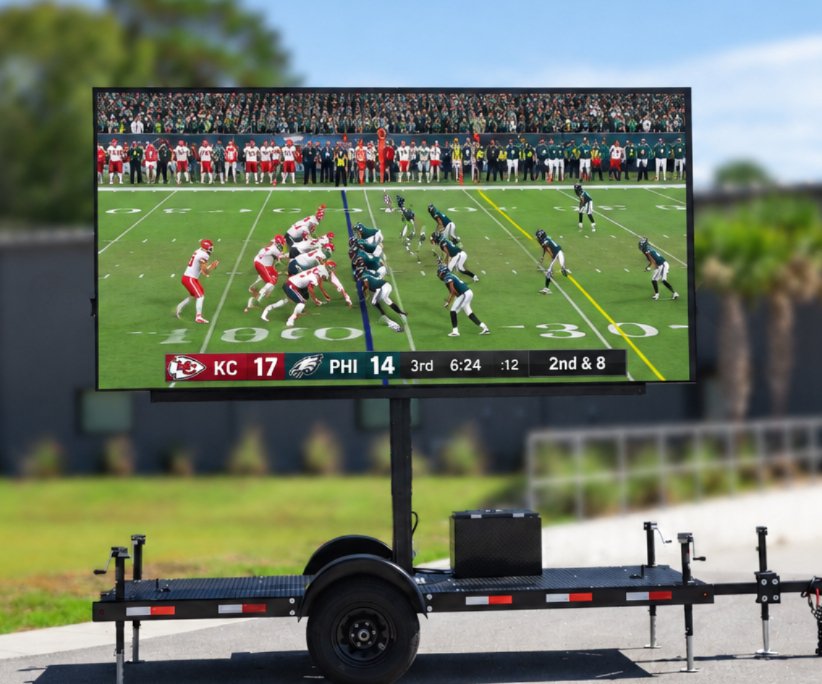
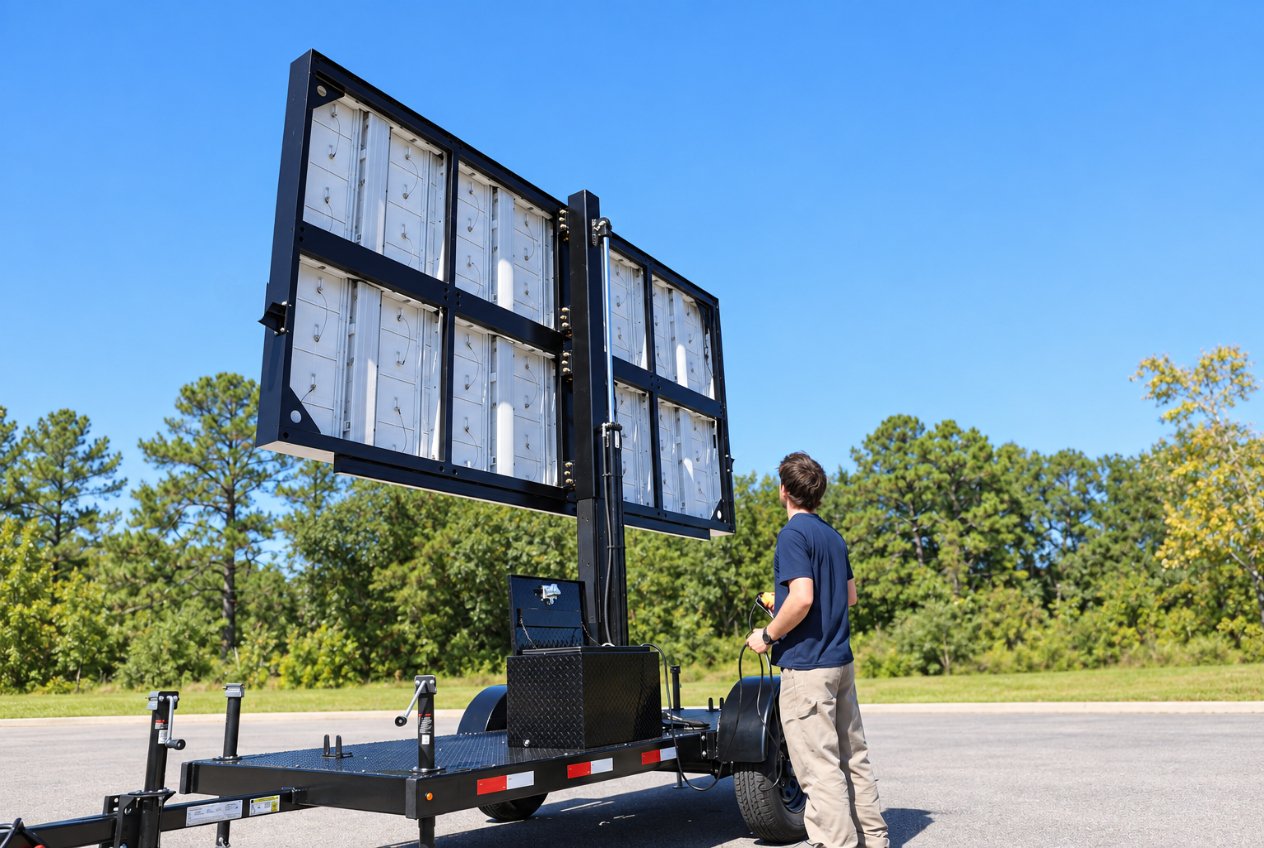
An outdoor LED trailer is a video wall mounted on a mobile trailer. It is towed in, leveled, and raised into place. Many include an onboard generator and an operator. Trailers fit parking lots, fields, festivals, watch parties, movie nights, and many outdoor weddings - anywhere a truck can reach a level, open spot.
An outdoor truss or stage wall uses weather-rated modular LED panels hung from an overhead truss structure or ground-supported on a stage deck. Event planners use outdoor truss walls for concert main stages, festivals, rallies, and outdoor venues where a trailer cannot drive in or where the screen needs to frame a stage.
An indoor panel wall is built on site from modular fine-pitch LED panels. It belongs in ballrooms, conference stages, sanctuaries, trade-show booths, and any indoor venue. Setup takes longer than a trailer because the wall is assembled tile by tile on site.
Indoor and outdoor screens are not interchangeable. An indoor wall looks washed out in sunlight and isn't built for weather. An outdoor-rated wall (whether on a trailer or a truss system) stays visible in daylight and can handle rain; wind is usually why one has to be lowered or de-rigged. Tell owners if the event is inside, outside, or under a tent, and whether any of it runs in daylight.

How big a screen do you need?
Start with the farthest person who needs to see it.
A simple rule of thumb: for video, the screen should be at least as tall as the distance to the back row, divided by six. If people need to read slides, names, or fine text, divide by four instead. If the last row is 60 feet away, you want a screen about 10 feet tall for video, or about 15 feet tall for text. For a typical widescreen (16:9) picture, a 10-foot-tall screen is roughly 16 to 18 feet wide.
A compact trailer around 12 feet wide often suits smaller gatherings (under about 250 people). A mid-size screen around 16 to 17 feet wide is a common choice for a few hundred people. Large festivals or wide fields may need 20 to 23 feet, or more than one screen. Include the venue, guest count, viewing distance, and what you'll be watching in your request.
Brightness for daylight
Brightness is measured in nits. Typical indoor LED panels run about 800 to 1,500 nits - plenty in a ballroom, and washed out in the sun. Outdoor-rated walls (trailers and outdoor truss panels) typically need about 4,000 to 6,000+ nits to stay readable in daylight; screens that face direct midday sun are often specified even brighter. Tell the owner the event is outdoors and in the daytime, and ask them to confirm the wall is outdoor-rated and bright enough for that light.
Power, permits, and setup space
- Power: Many LED trailers run on an onboard generator. Some can also tie into venue power, often a 30-amp or 50-amp connection. Modular panel walls (indoor walls and outdoor truss walls) need a dedicated plan - venue power or a separate towable generator. Ask for a power sheet and send it to the venue. A standard wall outlet is almost never enough.
- Space and access: A trailer needs a clear path in and a level, firm surface for its outriggers (the stabilizing legs). One common operator guideline is a path about 14 feet high and 20 feet wide. Walk it for low branches, power lines, tight gates, and soft ground. A panel or truss wall needs floor, stage, or ceiling rigging space, room for ballast and road cases, and a realistic load-in route.
- Permits: Parks, street closures, municipal events, and some private outdoor sites may require a permit for a trailer, a temporary truss structure, a generator, or amplified sound. The venue or city usually issues it; the owner can provide the footprint, ballast, and power details. Don't assume a permit is included.
- Setup and weather: Trailers often go up in about 30 to 90 minutes when access, power, and content are ready. Modular panel and truss walls often take a few hours; large builds may need to load in the day before. Outdoor-rated screens typically handle rain, but wind is the bigger issue - owners have a cutoff and will lower or de-rig the screen if it isn't safe. Ask what happens if the event is delayed or called.
What's usually included (drop-off vs. with a tech)
For most live events you want a full-service package: delivery, setup, an on-site operator, content playback, and teardown. Most LED trailer rentals already include an operator, and many include onboard power and a way to play your files. Indoor and outdoor modular panel walls vary more. Some quotes are "equipment only" (also called dry hire), which can look cheaper until you add truss rigging, processing, labor, and a technician. If you're spending a client's or a company's budget, book it with a technician on site.
A rental wall can play videos, slides, movies, live sports, worship lyrics, and live camera shots of the stage (often called IMAG). Ask for the screen's exact pixel size before you finalize graphics, and send files a few days ahead - common types are MP4 or MOV for video and PNG or JPEG for stills. If you're streaming a game or a service, confirm whose login will be used and don't rely on venue Wi-Fi alone.
What affects the price
There is no single sticker price. Quotes for "the same size screen" can differ by thousands, mostly because they include different things. Treat the figures below as typical, approximate ranges for a one-day U.S. event, not a quote.
For a common mid-size outdoor LED trailer (around 12 to 17 feet wide), a typical full-service day often falls around $3,000 to $8,000, usually with delivery, setup, and an operator. Larger festival-size trailers or outdoor truss-mounted stage walls can run higher, sometimes around $9,000 to $15,000 a day. Smaller indoor walls, especially equipment-only, can start closer to $1,000 to $3,500 a day. A full-service mid-size indoor wall (around 16-by-9 to 20-by-12 feet) in a major market is often about $8,000 to $15,000 all-in. A useful rule of thumb for a full-service indoor package is roughly $35 to $75 per square foot per day.
Price also moves with image sharpness (a smaller "pixel pitch" number means a tighter picture up close), the number of days, delivery distance, an on-site technician, power, and whether a modular wall is hung from overhead truss ("flown") or stands on the stage or floor. Always compare itemized quotes. The cheapest number is often missing the things that keep the screen from going dark.
We take no commission, no booking fee, and no markup, so the price you discuss with the owner is theirs.
Planning frequent outdoor events? If a school, athletics department, parks and recreation department, or outdoor venue plans to use a video wall many times a year, buying your own push-button hydraulic LED trailer from FocalPoint FX (FocalPointFX.com) can be worth comparing alongside single-day rentals.
How far ahead to book
Aim for four to six weeks. For peak dates, festivals, or a large custom wall, eight to twelve weeks is safer. Some owners can still help on two to four weeks' notice, and last-minute is sometimes possible, but your choices shrink. If your date is already close, still send a request.
Questions to ask the owner
- What size are you recommending, and why does it fit this venue and crowd?
- Is the screen rated for indoor, outdoor (trailer or truss), or both, and will it stay visible in daylight?
- What is included: delivery, setup, teardown, an on-site technician, power or a generator, and audio?
- Does a technician stay for the entire event, and what happens if a panel or player fails?
- What power, space, and access do you need from the venue? Is a permit likely?
- How long is setup, and when do you need to arrive?
- What file types and dimensions should I use, and when do you need the files?
- Can you take a live camera or a streaming feed if we need one?
- What is your weather or wind plan, and what is the cancellation or delay policy?
- Do you carry liability insurance, and can you provide a certificate for the venue?
A simple checklist
- When you request quotes: date, city, and venue (indoor, outdoor trailer, outdoor stage/truss, or tent); guest count and the farthest viewing distance, if you know it; what you'll show; and whether any of the event is in daylight.
- Two to three weeks out: compare itemized quotes; share the power sheet and access notes with the venue; ask about permits and an insurance certificate; and start collecting content at the correct size.
- The week of the event: send final files a few days ahead; recheck weather, load-in path, and arrival time; name one day-of contact for the operator; and allow the full setup window before guests arrive for a picture-and-sound check.
Event ideas
Corporate meetings and product launches, churches and outdoor worship services, school graduations, sports watch parties and tailgates, festivals and concerts, community movie nights, weddings, trade shows, fundraisers, rallies, car shows, and holiday events. Read all 12 ways to use a video wall at your next event →
Request a video wall
It's free for planners, and we take nothing from the booking.